 Meadowsweet Pottery
About
Made slowly, inspired by nature.
Meadowsweet Pottery began as a small weekend studio practice. It was set up by Elena Murphy, an artist and maker based in rural Northern Ireland.
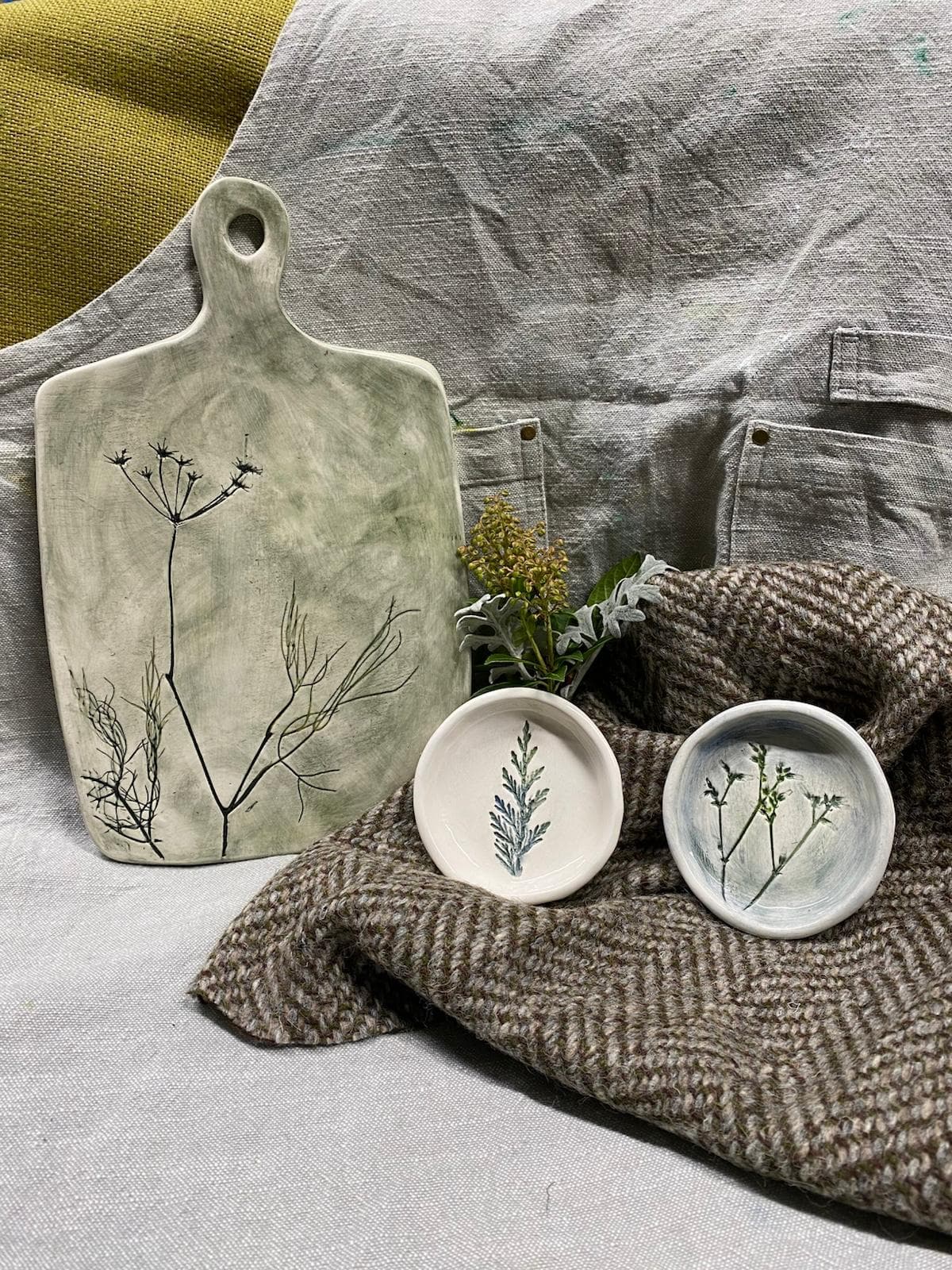
With a background in Fine and Applied Art and years of experience teaching Art and Design, Elena's work is rooted in thoughtful, hands-on making. Each piece is either slab-built or wheel‑thrown, then shaped, finished, and glazed by hand in small batches.
Inspired by natural forms, textures, and quiet landscapes, the work includes both functional pottery for everyday use and decorative pieces meant to bring a sense of calm into a space.
The goal is simple: objects that feel grounded, durable, and connected to the natural world — made to be lived with and enjoyed.
Meet Elena
The maker behind the clay
Elena Murphy is an artist, maker, and teacher based in rural Northern Ireland. Her studio sits near the beautiful Strangford Lough — close to the hedgerows and landscapes that shape the colours and textures of her work.
Trained in Fine and Applied Art, she works in small batches, makes everything by hand, carefully and diligently. Each piece is a little bit of the landscape she lives in, made to sit quietly in someone else's home.
How it's made
From clay to finished piece
Every piece passes through the same unhurried stages — each one done by hand in the studio.
The Clay
Everything begins clay. Each batch is wedged by hand to remove air and bring the clay to an even consistency before work begins.
Forming
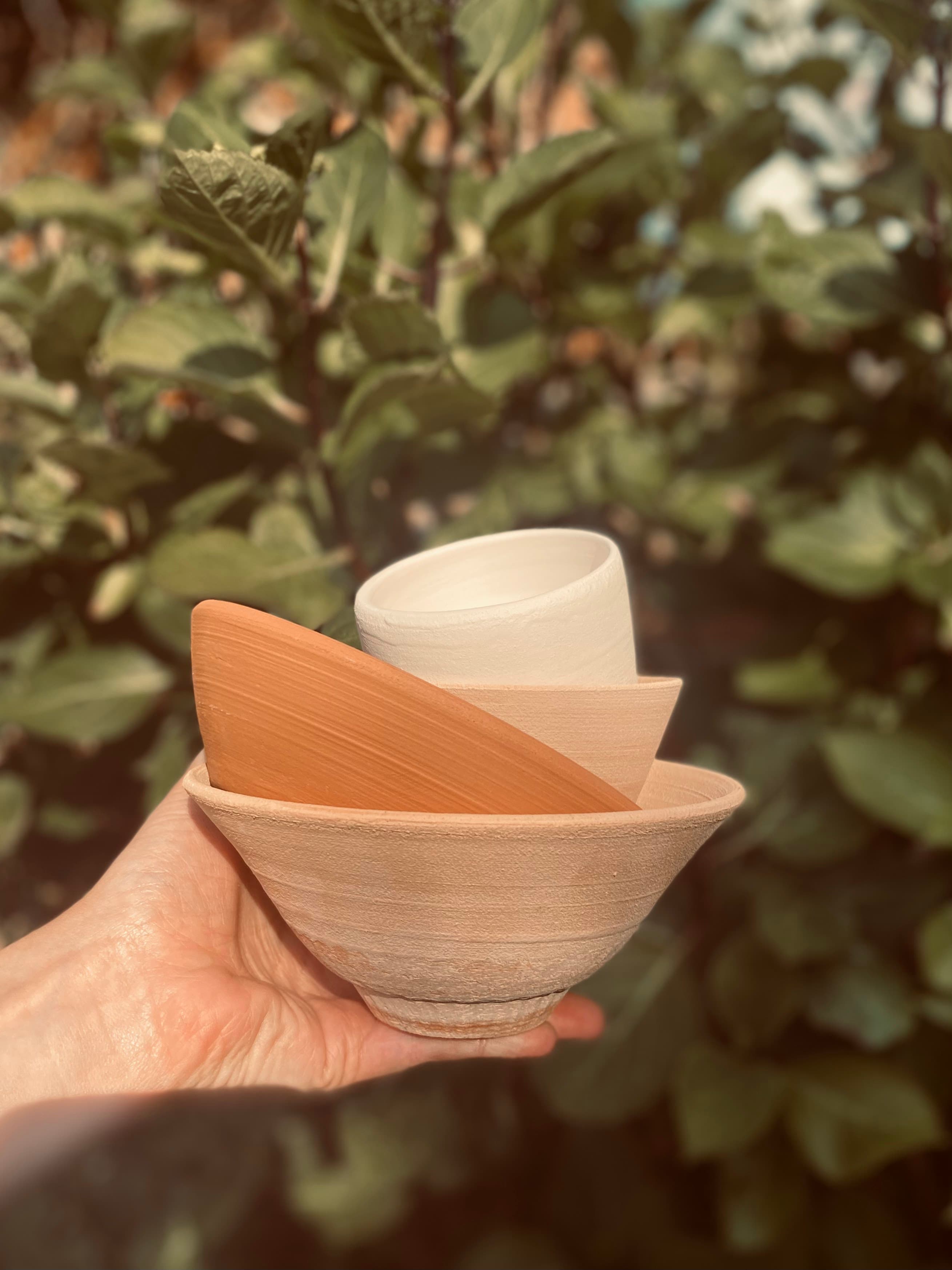
Pieces are either slab-built or wheel-thrown depending on the form. Slab-building suits flatter, more architectural shapes, while the wheel is used for rounder, softer pieces. Surface texture is also added at this stage — impressed marks from leaves, grasses, or tools found in the landscape.
Shaping & Trimming
Once leather-hard, each piece is trimmed, refined, and finished by hand. Edges are smoothed, details are carefully refined.
Drying
Pieces dry slowly and evenly before going into the kiln. Rushing this stage causes cracking, so patience is part of the process. Each piece is checked by hand before it moves on.
Bisque Firing
The first kiln firing hardens the clay into ceramic. At this stage the pieces are unglazed and porous — ready to absorb the glaze that comes next. The kiln runs overnight and cools slowly before being opened.
Glazing
Underglazes and glazes are chosen to reflect the colours of the Irish landscape — soft greens, warm creams, earthy browns, and quiet blues. Each piece is dipped or hand-brushed, then wiped clean on the base before going back into the kiln.
Glaze Firing
The final firing transforms the raw glaze into a glassy finish. The kiln reaches over 1000°C and the results are never entirely predictable — small variations in colour and surface are what make each piece one of a kind.